

Over generations, traditional schooling has been characterized by mechanized assembly lines. From childhood up until graduation, a student goes through standardized schooling where they simply have to memorize facts and answer examination questions in accordance with those facts to pass to the next stage in life. With the current state of affairs, where everything has become increasingly fast-paced and ever-changing, traditional rote learning has lost relevance as a method of teaching.
Child-centric schooling has proved beyond any doubt to be the most effective strategy in delivering quality education. Once a school adopts a child-centered approach, all sorts of possibilities open up. For instance, top-notch educational institutions such as Swarnprastha Public School have demonstrated just how much can be done when one breaks out of the conventional mold.
The Central Problem with Traditional Rote-Based Schooling
As has already been mentioned above, traditional schooling is primarily based on rote learning. In other words, learning revolves around a student's ability to remember something. Although this may result in high scores for some students, rote learning will never teach a child conceptual understanding and mastery. Most importantly, a typical student is compelled to study in a fear-driven environment. As a result, all motivation evaporates within a child, leaving no room for curiosity and enthusiasm about studying.
How Does the Concept of a Child-Centric Approach Work?
When designing a progressive curriculum, one needs to understand that there are certain fundamental pillars on which the entire concept hinges. The following sections contain detailed explanations of how a progressive approach can work in terms of teaching students.
Unconditional Positive Regard
Within the context of a child-centric learning environment, a student feels unconditionally loved, respected, and appreciated, no matter what he or she does. There is an immense difference between feeling judged against certain criteria and having unconditional regard. As soon as an atmosphere of fear dissolves, a child can finally step out of his or her comfort zone and learn actively through mistakes.
Unique Individuality and Freedom to Be Oneself
There cannot be two children who would be absolutely alike in terms of their abilities and temperament. Every single child is unique, and he or she is supposed to have opportunities to develop individual qualities. For instance, if someone prefers sciences over languages and math, then he or she must have ample opportunities to study according to the preferences.
Community Interdisciplinary Learning
Life does not occur in isolation from anything else. The curriculum of a child-centric educational institution is designed in such a way as to provide a child with opportunities to develop interdisciplinarily while engaging with the community. Thus, when solving a problem for the whole community or working on interdisciplinary team projects, children develop knowledge across a number of disciplines at once.
Modern Replacements for Traditional Mechanized Education
One cannot simply do away with traditional rote methods in an academic setting overnight. To achieve that end, innovative methodologies and special areas should be incorporated into the daily activities of children in the process of studying.
Project-Based Learning (PBL) and STEM
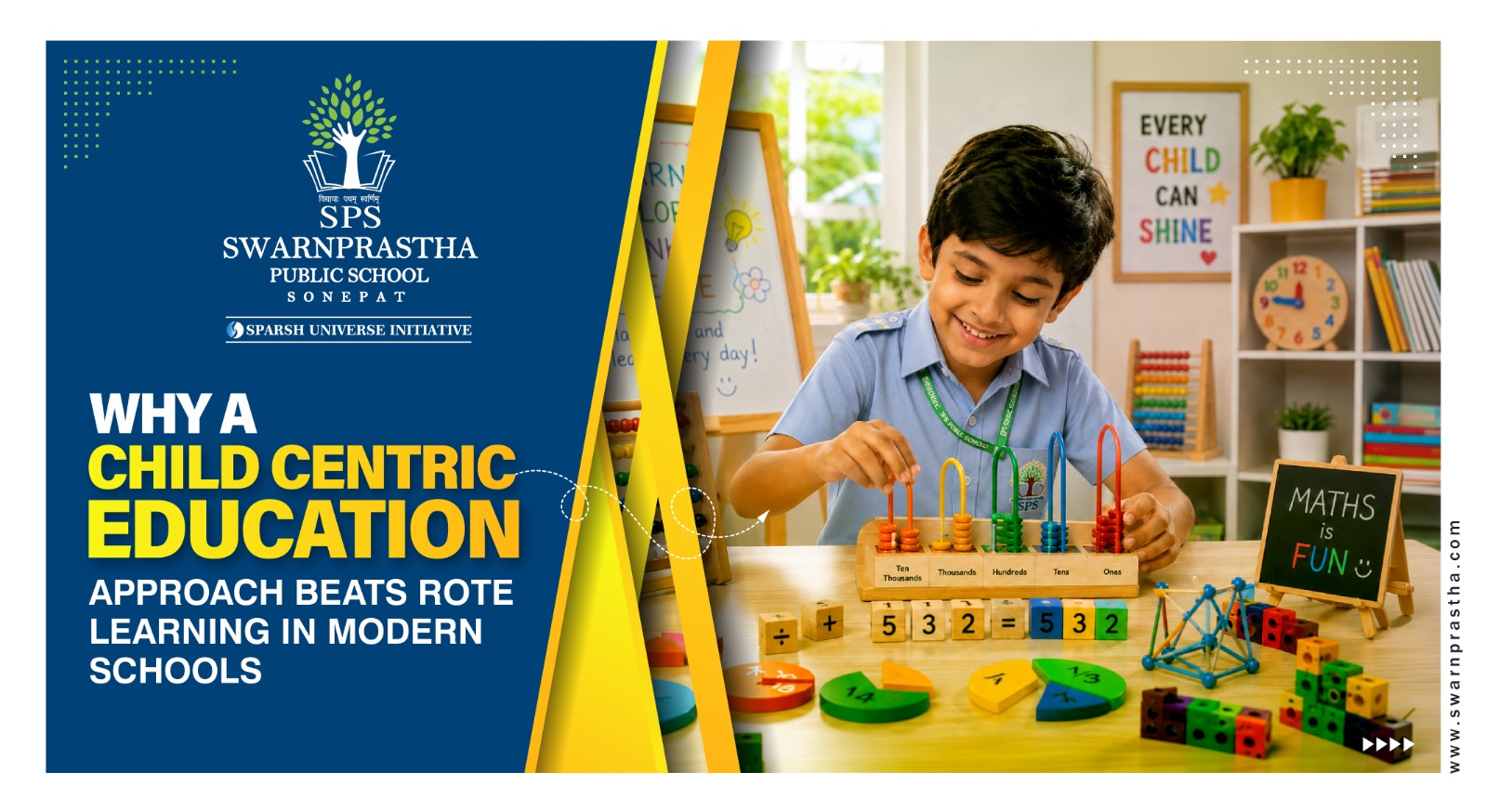
The idea of replacing old textbooks with modern project-based learning techniques and STEM courses is quite simple but immensely effective. Unlike in traditional environments where a student is simply asked to read and reproduce information, progressive schooling relies on active hands-on involvement in practical processes.
A school approved by such entities as NITI Aayog to install the latest technology is bound to give its students an enormous advantage over others because the institution will have an Atal Tinkering Lab (ATL). There, kids from Grade 6th to 12th study and use various futuristic devices such as robots, 3D printers, electronic components, IoT sensors, and artificial intelligence tools.
Growing up Entrepreneurs
Children brought up in conventional schooling systems are typically trained to follow orders and look for employment opportunities in the future. A child-centric approach enables a school to foster leadership qualities and entrepreneurial spirit from an early age. In this regard, the institution must have a special facility dedicated to cultivating innovative ideas among young people. This unique space is called a Design, Innovation, Creativity & Entrepreneurship (D.I.C.E) Incubation Lab.
Minding Emotional Well-Being Through Mindfulness Courses
Quality education involves much more than memorizing stuff. Unfortunately, most traditional school systems tend to overlook the emotions and mental health of children. In order to remedy this problem, modern educational institutions incorporate special courses devoted to mindfulness into their curricula.
Swarnprastha Public School – Ideal Example of Progressive Education System
If you wish to ensure quality education for your child, then Swarnprastha Public School will be a great choice because it represents the ultimate standard of a child-centered learning environment. On its huge sprawling premises spread across 18 acres, the institution has everything needed for students to cultivate necessary hallmarks such as leadership, analytical skills, environmental sensitivity, and teamwork. Besides, its flexible boarding system caters to modern families regardless of their domestic circumstances.
Conclusion
The bottom line is that rote-based education makes kids unprepared to cope with fast changes in this automated world. One must go ahead and switch to a new approach because a child-centric learning environment is not a luxury anymore. It is a necessary condition for providing high-quality education. By creating an emotionally safe space for a student to be himself and develop unique talents, one can create conditions for nurturing a real-world leader.
Enroll your child now to enjoy the benefits. Get in touch with the admissions office at Swarnprastha Public School for a visit and subsequent enrollment in this prestigious educational establishment.
FAQs : Child-Centric Learning
Que.1) How does the concept of a child-centric learning approach differ from traditional schooling?
Ans) Child-centric schooling differs substantially from traditional schooling in terms of priorities. In other words, the former focuses on the emotional safety of children, their unique individuality, personal growth, and freedom to explore different disciplines.
Que.2) What role does the D.I.C.E Lab play at Swarnprastha Public School?
Ans) Design, Innovation, Creativity & Entrepreneurship Incubation Lab is an innovative space created for nurturing a child's entrepreneurial side. Here, kids can invent something and pitch to venture capitalists for mentorship.
Que.3) What is so special about the school's ATL?
Ans) As a part of the curriculum at Swarnprastha Public School, each student has access to the Atal Tinkering Lab. There, they use such futuristic tools as robots, 3D printers, electronic components, IoT sensors, and AI devices.
Que.4) What are the advantages of the school's mindfulness course?
Ans) The special mindfulness curriculum includes such topics as stress management and emotional intelligence. These important elements enable a child to relate positively to studying.
Que.5) What are the boarding options available at Swarnprastha Public School?
Ans) Apart from conventional schooling systems, the institution offers various boarding options to suit every need.
Que.6) . How does Swarnprastha Public School encourage entrepreneurial thinking in students?
Ans) Through the D.I.C.E Incubation Lab, students get the chance to design real products or services and pitch their ideas to investors, helping build entrepreneurial confidence from an early age.
