
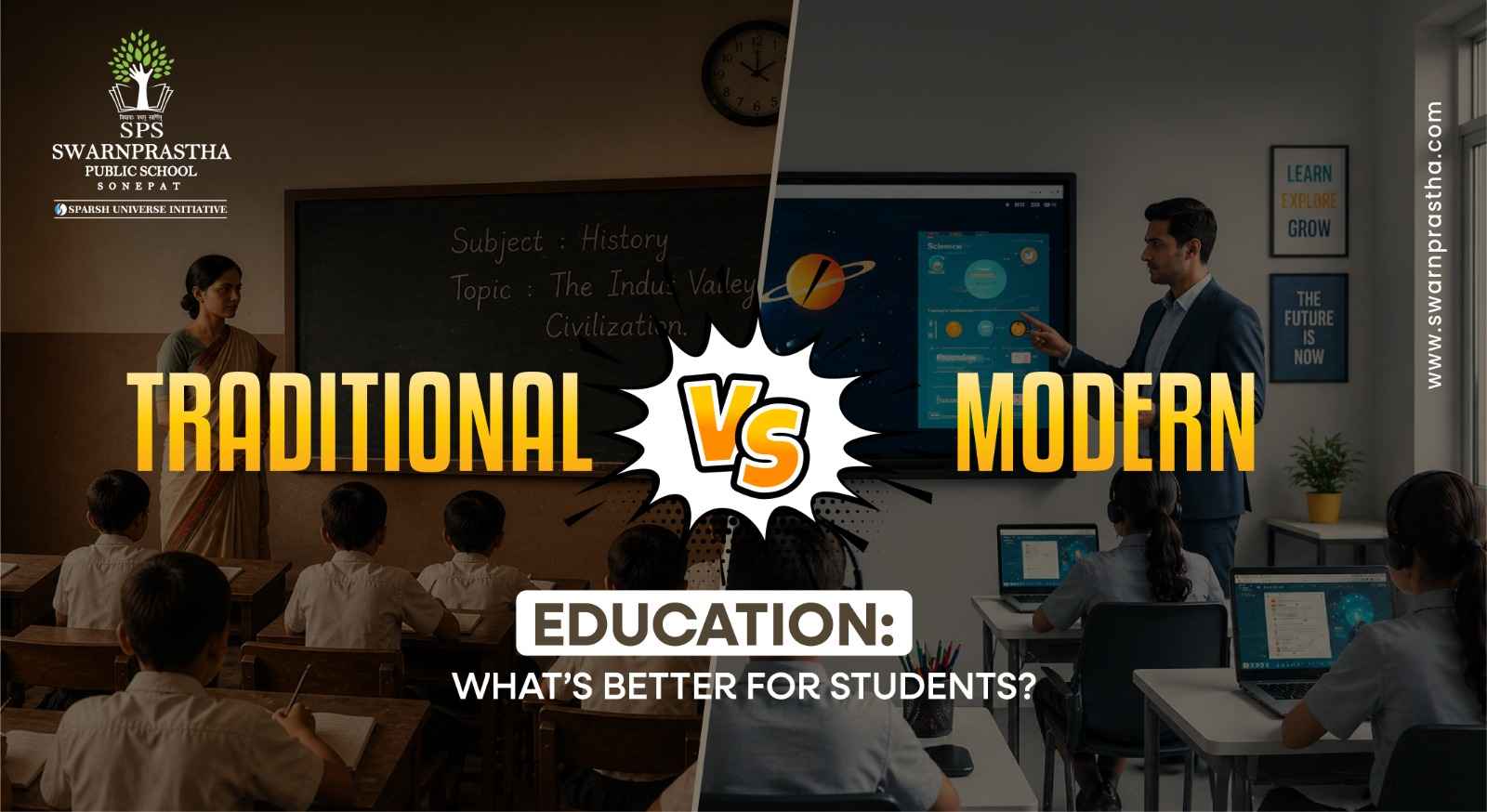
It can be hard to find the right balance for a child's education because there is no one right answer. We all want our kids to do well in school, but we also worry about whether they are ready for a world that changes constantly. A lot of us went to school in a traditional system that put a lot of emphasis on tests and lectures. That structure has its own set of pros and cons, but the needs of students today have truly shifted. We believe the best approach at Swarnprastha Public School is not to simply pick one over the other. Instead, we prefer to mix the discipline of traditional learning with the natural curiosity of newer methods. It is about creating a space where children feel safe enough to try new things and find out what they are really capable of doing. This balance ensures they do not just perform well in tests, but also build the inner strength they will need for the future.
We have found that true discipline is not about rigid rules, but rather about having a sense of purpose. When a student understands the ‘why’ behind their lessons, they naturally become more invested in the ‘how’. This ‘native wisdom’ and imagination are what we strive to respect and cultivate in every single lesson at Swarnprastha Public School. When children are busy doing activities they love, the traditional need for strict policing simply disappears.
The Importance of Traditional Discipline
People have always respected traditional education for its rigour and the way it focuses so heavily on core subjects. There is a lot to be said for the simple act of sitting in a classroom and learning how to focus on a single task for an hour. We have found that true discipline is built through consistency and a genuine passion for one’s subjects. Whether it is Mathematics, Science or English, having a structured environment helps children build the mental stamina they will eventually need for university.
- Structured Learning: A clear schedule and regular tests help kids learn how important it is to stick to a routine and meet deadlines.
- Core Academic Strength: By focusing on the basics, students can get a good grasp of them before moving on to more difficult ideas.
- Basic Values: In traditional systems, respect and a strong work ethic are very important and these are qualities that everyone needs to be successful.
Accepting the Modern Way of Thinking
The basics are still very important, but the modern world needs different skills than it did twenty years ago. As part of the new education policy, we at SPS combine digital literacy, critical thinking and working together. It's not about getting rid of books; it's about using technology and projects to bring them to life. SPS has always put the child at the centre of learning. We want our students to be active participants in learning, not just passive receivers of information.
- STEM Education: We put a lot of emphasis on Science, Technology, Engineering and Mathematics because these fields are going to shape the job market of the future.
- Project-Based Learning: Students don't just learn from a whiteboard; they work on projects that feel much more real to them. It helps them understand how what they learn in school can be used in real life.
- Experiential Framework: We want kids to look into and test out ideas. This hands-on method helps people feel like they have "native wisdom" and imagination.
Making the environment balanced
The most important thing in the debate between traditional and modern education is often left out: the student's health. We don't just care about the results, we also care about how the students are doing as people. We think that getting good grades isn't the only thing that matters for real success. It's about teaching kids to be confident, balanced and really enjoy learning. We have created a one-of-a-kind Mindfulness curriculum to do this. A kid who is stressed or worried can't learn well. By putting emotional intelligence and academic excellence on the same level, we make a safe space where every child can thrive.
What a Partnership Does
We have always thought that a child does best when home and school work together. The best education is when what kids learn in school is also taught at home. We want our parents to feel like they're on the journey with us, not just getting updates at the end of the term. When kids see that their teachers and parents want the same things, they feel very safe. This comfort shows up in both their behaviour and their learning. We want to keep things open and easy to talk about so that no one is caught off guard.
Getting Ready for the Future
Our goal at Swarnprastha Public School hasn't changed as we look to the future. We are here to help people grow in all areas of their lives through character-based education. It's about giving each student the attention they need without sacrificing quality. You can see from the paths our alumni have taken that you don't have to choose between traditional vs. modern education. At SPS, the two always go hand in hand. By combining the best of both worlds, we make sure that our students are ready for more than just test results.
Frequency Asked Questions
Que.1) Does a modern approach mean that traditional subjects are given less importance?
Ans) Not at all. The modern approach actually enhances how children learn those traditional subjects. By using project-based learning in Mathematics or Science, students often find that they understand the core concepts much more deeply than through simple memorisation.
Q2. How can parents help bridge the gap between traditional and modern learning at home?
Ans) The best way is to encourage curiosity. If your child asks a question, try to explore the answer together through research or a small home experiment. This mirrors the modern inquiry-based learning we use at school, while maintaining the traditional value of parental guidance.
Q3. How does Swarnprastha Public School combine traditional and modern education?
Ans: Swarnprastha Public School blends structured academic learning with experiential teaching, STEM education, project-based learning, mindfulness, digital classrooms, and value-based education. This balanced approach helps students achieve academic excellence while developing confidence, creativity, leadership, and critical thinking skills.
