


The educational landscape is shifting beneath our feet at quite a dizzying pace. We often hear from parents who worry that 'the old ways' are being binned in favour of flashy gadgets. It is a valid concern for any parent who values the rigour of a traditional education. Actually, striking a proper balance between the tactile charm of a physical book and the slick efficiency of a tablet is no small feat. We see it as our absolute duty to ensure that innovation serves the student, rather than the student becoming a slave to the gadget. Technology should never be allowed to become a distraction from the core goal of learning; it must remain a quiet partner in the classroom.
In our experience, a screen can be a wonderful window to the world, but it can’t replace the focus that comes from turning a paper page. We are quite careful when the devices are switched on and, perhaps more importantly, when they are tucked away. It is about being intentional with these tools so that the 'human' element of teaching stays at the front and centre. Instead, it must act as a bridge to deeper understanding. This blog explores how we navigate this delicate path to benefit your child. We want to show how tradition and tech can actually live in perfect harmony.
The Digital Classroom as a Tool for Discovery
Screens have become part of everyday modern life, but in a day school in Sonipat, they must have a purpose. We do not use computers just for the sake of looking “modern” or “progressive”. For example, in a Geography lesson, a student might use satellite imagery to explore a volcanic crater. This brings a dry textbook chapter to life in a way that was simply impossible even a decade back. It turns a passive learner into an active explorer.
At Swarnprastha Public School, we believe that technology should support the teacher’s expertise. A digital whiteboard is wonderful, but it still requires a skilled educator to lead the discussion. We use these tools to provide instant feedback and to cater to different learning styles. Some children grasp a concept better through a video simulation, whilst others prefer to read the theory. The digital age allows us to offer both simultaneously.
Preserving the Sanctity of Pen and Paper
Despite the rise of typing, the ability to write by hand remains a vital skill. We have noticed that the physical act of writing helps with memory retention. When students take notes during a History or English class, they process information more thoroughly. We are quite firm about maintaining the 'traditional' aspects of schooling that still work. Examinations are still largely handwritten affairs, and we must prepare children for that reality.
- Handwriting develops fine motor skills in younger children.
- Physical books encourage longer attention spans.
- Library sessions remain a cornerstone of our weekly schedule.
Personal interaction during assemblies fosters a sense of community.
We make sure that students spend enough time away from blue light. There is a time for the iPad and a time for the ink pen. Actually, striking this balance ensures that our children do not lose that vital 'human touch' which truly defines a proper education. When we look at Science and Mathematics in this age of simulation, it is quite clear that these subjects have benefited immensely from software that makes the abstract feel concrete. In Chemistry, for instance, we are now able to simulate reactions that might be a touch too dangerous or perhaps too expensive for a standard school lab.
This allows students to experiment far more freely, without that nagging fear of making a mistake and ruining an experiment. It builds a genuine sense of 'intellectual curiosity' that tends to stay with them throughout their entire lives. Instead of just reading about a theory in a dusty volume, they can see the variables change right before their eyes. However, we do make sure they still understand the manual work behind the data, so they aren't just pushing buttons without thinking.
In Mathematics, data visualisation tools help pupils see the patterns behind the numbers. Instead of just solving equations on a chalkboard, they can see how a graph changes in real-time. This makes the subject feel far less intimidating. SPS has invested in these technologies to ensure our students remain competitive on a global stage. However, we still insist on mental arithmetic and the understanding of basic principles. Technology is a supplement, not a crutch.
Coding and Robotics as the New Literacy
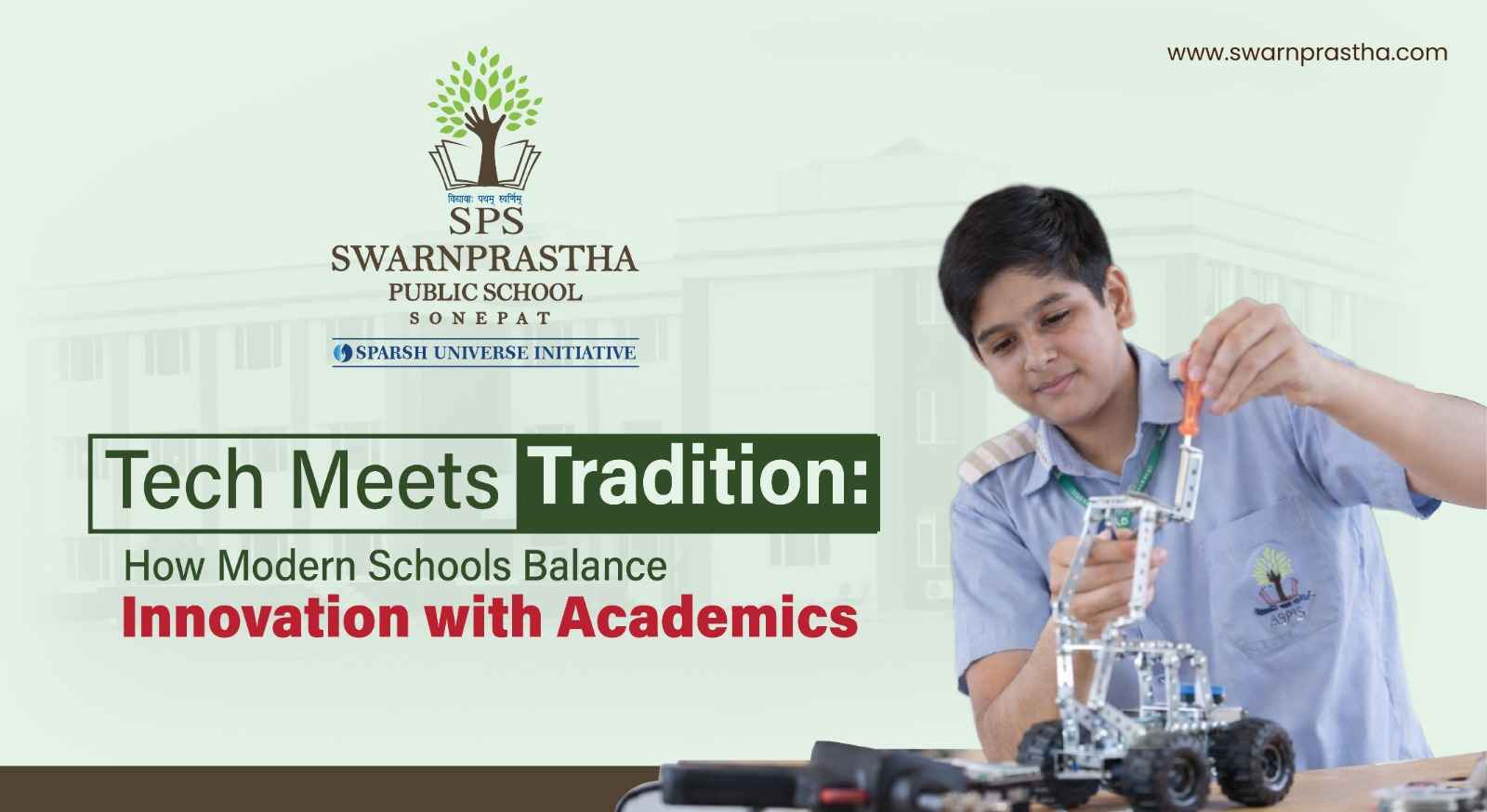
We often speak about the 'three Rs', but coding is quickly becoming a fourth. Understanding how a machine thinks is no longer an optional extra. It is a fundamental skill for the twenty-first century. Our robotics workshops allow children to apply Physics and Computer Science in a practical setting. They learn that a 'glitch' is just a problem waiting for a solution.
This teaches resilience and logical thinking. If a robot doesn't move as expected, the student must go back through their logic step by step. Actually, this is exactly the sort of 'critical thinking' that universities and employers are searching for nowadays. We provide these opportunities because we want our students to be creators of technology, rather than just passive consumers who press buttons without a second thought. It is about giving them the keys to the engine, so to speak.
Digital Safety
Now, we are well aware that one of the biggest worries for any parent is the 'online world' and those various pitfalls it can hide. We take our responsibility for digital safety incredibly seriously. Technology is only ever permitted under the strictest supervision and within a very secure framework. We make a point of teaching children about 'digital citizenship'—how to carry themselves with integrity in those virtual spaces. It really isn't just about how to operate a computer, but how to use it with a bit of wisdom.
The Parent-School Connect
We do encourage you to keep an open dialogue with us concerning your child's screen time at home. It’s quite important that the school and the home stay on the same page regarding these boundaries. When we work together, we can ensure technology remains a positive force for their development. Discipline in the digital realm is every bit as vital as discipline out on the playing field.
Conclusion
The journey of education is always about preparing for what’s ahead whilst still respecting the past. We aren't interested in chasing every passing trend that pops up in the tech world. Our focus remains on what actually helps a child grow. Instead, we choose tools that genuinely enhance the academic experience. By blending the best of both worlds, we provide a stable yet exciting environment for our students. At Swarnprastha Public School, we are committed to producing graduates who are technically proficient but still grounded in traditional values.
Frequently Asked Questions
Que.1) Will too much technology in school affect my child's ability to focus on long-form reading?
Ans) We are very aware of this risk and actively combat it. Our curriculum still places a heavy emphasis on physical books and extended writing tasks. Tech is used in short, purposeful bursts rather than as a constant presence. By balancing the two, we actually find that students become more versatile readers who can handle both digital and print media effectively.
Que.2) How do we ensure that students don't become overly dependent on calculators and software for Mathematics?
Ans: Fundamental skills are taught first using traditional methods. Calculators are only introduced once a student has mastered the manual calculations. We use software to explore complex patterns and data, but the 'pen and paper' method remains the standard for our internal assessments and homework.
Que.3) Why is coding and robotics important for school students?
Ans: Coding and robotics help students develop logical thinking, creativity, problem-solving, collaboration, and innovation. These skills prepare them for future careers in technology while strengthening their understanding of Science, Mathematics, and Engineering concepts.
Que.4) How does technology improve learning in modern schools?
Ans) Technology can make lessons more interactive through digital simulations, visual resources, virtual activities, and educational software. When used with a clear learning purpose, it can help students understand difficult concepts and explore subjects more deeply.
