


As the world progressively goes digital, the traditional definition of the classroom has transformed. The possibility of online learning has grown in the last decade and especially during the global pandemic, such that online learning has now become an established part of mainstream education. Although most schools are back in their physical classrooms, the effects of online learning are still evident and raise a key question: is this the future of classrooms? Understanding how this new educational environment operates is crucial for parents and teachers to ensure student success in this era.
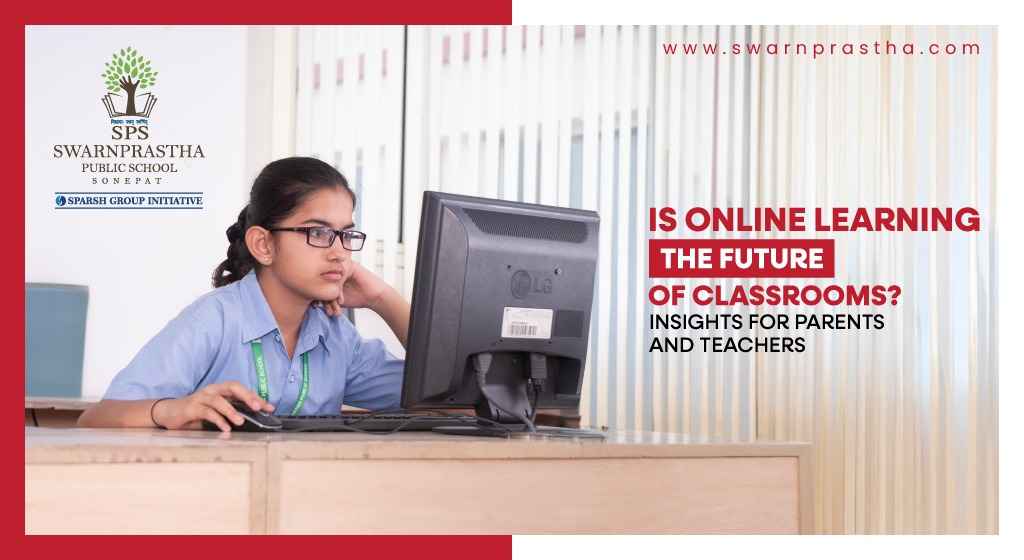
The Rise of Online Learning
Online learning is the means of instruction that takes place through online channels, allowing learners to access materials and assignments, as well as collaborative tools, practically anywhere. It is a major participant in primary and secondary education despite its original intention to recommend higher education and distance learning. The ease of implementing many features of the classroom online has been made possible by technological developments, an expansion of internet access and the flexibility of digital tools.
It is observed that during the COVID-19 pandemic, the use of online learning was adopted by schools all over the world at scale. It was the first prolonged virtual classroom experience for many of its students. This necessary transition demonstrated the potential and difficulties of distance learning.
Benefits of Online Learning
There are several advantages to online learning. One of the best aspects of it is flexibility. Students can learn at their own pace, watch recorded lessons and organise their personal study time according to their needs. This strategy would suit learners with all kinds of learning styles, be it visual, auditory or kinesthetic and support differentiation.
Also, in online learning, students have access to an enormous collection of extra assets, such as videotapes, simulations, interactive evaluations and internationally renowned mentors. In the case of schools, it may take the form of improved curriculum delivery as well as enabling international perspectives and digital fluency in all lessons.
In addition, online learning can result in more student autonomy and accountability. Students who are properly guided can learn how to manage time, seek help and take responsibility for their academic progress.
Challenges to Consider
Although opting to take online courses comes with numerous benefits, there are also some significant challenges associated with it. The absence of social interaction is one of the most serious. The classroom is not only a school of learning for students, particularly the younger generation, but also a social setting where interpersonal skills are cultivated. Virtual environments may reduce peer collaboration and emotional experience.
Screen fatigue is another issue. Students who frequently use digital devices can suffer health problems related to attention disorders, vision and general health. And teachers need to balance onscreen time and offline experiences to have a healthy learning experience.
Access to the internet continues to be a key issue in several parts of India. Such a digital gap may increase the disparity between the learning achievements of students with varying socio-economic backgrounds. To achieve highly efficient online learning, it is essential to ensure the inclusion of infrastructure and support systems.
Understanding the Basis of Hybrid Learning
A classic combination of both online and offline, Hybrid Learning comprises the best of both worlds and brings together physical classroom teaching with online learning. This strategy combines the advantages of digital education with the socialisation and emotional aspects of face-to-face learning. Significantly, this model can be customised as per age, subjects and interest levels of students. While the theories can be learnt online, practical experiments or group projects happen in school classrooms, and choosing the best CBSE school in Sonipat Haryana ensures students gain both academic knowledge and real-world skills.This format provides more effective utilisation of classroom time and potentially causes effective learning experiences.
Preparing Students for a Digital Future
Digital learning is here to stay. It has become an integral part of everyday education, whether through full online classes or a blended approach. Schools now have the responsibility to equip students not just with academic knowledge, but also with the skills needed to work and communicate effectively in an increasingly connected world. These include the ability to think critically, use digital tools confidently and ethically, manage time well and maintain proper online behaviour.
As technology continues to evolve, teachers must regularly update their own skills through ongoing training. At the same time, schools need to put resources into strong digital infrastructure and explore the many online platforms that can make learning more engaging and effective.
Conclusion
Although online learning cannot replace real classrooms completely, it serves as an essential part of the educational landscape. The literal transition between physical and virtual spaces is one 21st-century skill that helps learners succeed. Consequently, instead of posing the question, 'Is online learning the future?', it is better to ask, 'How can we best incorporate this into the classroom of the future?'
Swarnprastha Public School is an institution where the school authorities recognise the potential of online education as a transformative factor. The school does not believe that digital innovation should come at the expense of human relationships that enable quality learning. Swarnprastha Public School, with its forward-thinking approach, equips students, teachers, and families with the skills and confidence to succeed in a blended learning setting.
FAQ
1. What measures are schools taking to ensure quality in online learning?
Schools are increasingly investing in professional development for teachers, upgrading digital infrastructure and adopting user-friendly platforms to ensure high-quality online instruction. Regular assessments, interactive content, personalised learning plans and feedback mechanisms help maintain academic standards. Institutions such as Swarnprastha Public School blend technological innovation with sound pedagogy to create a balanced and engaging learning experience for all students.
