


Your generation was told to study, score marks and land stable jobs. Mine heard the same advice. There's nothing wrong with it really—that path worked for millions of people over decades. But something's changed, hasn't it? The careers we assumed were secure simply aren't there anymore. Banks automate away entire departments. Factories operate with skeleton crews. Meanwhile, your neighbour's son launches an app from his bedroom and raises funding before he's twenty-three.
The world doesn't look like it did when we were planning our futures. Starting a business used to be this rare, risky thing only a few brave souls attempted. Now it's just another option young people consider seriously. Universities see this shift. Companies see it. Schools need to see it too. So here's what bothers me —why are we waiting until children reach eighteen to introduce business thinking? Those teenage years are when minds work fastest, when creativity flows most naturally, when taking risks feels exciting rather than terrifying. We're wasting precious time.
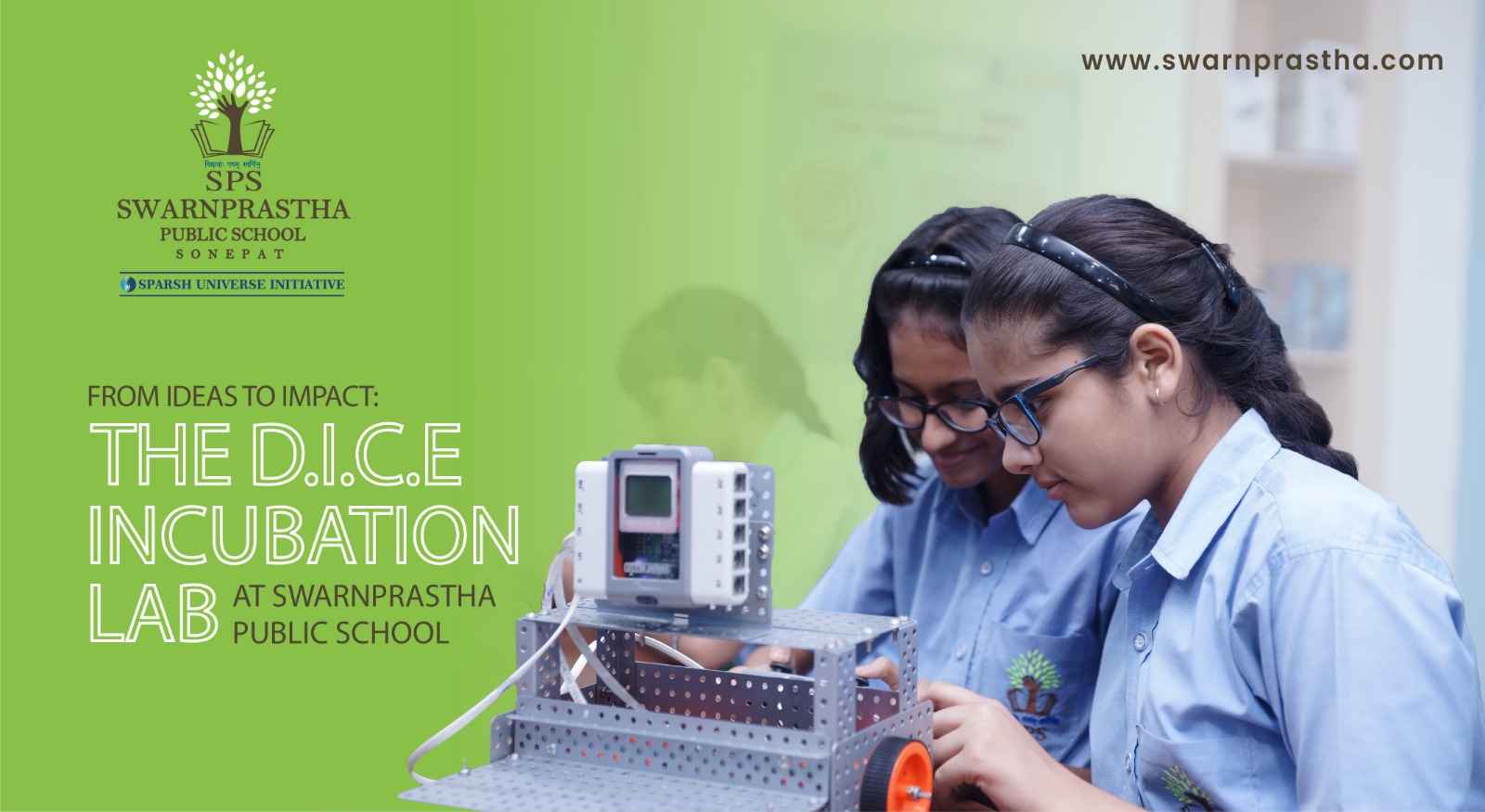
About six years ago, we stopped talking about this problem at Swarnprastha Public School—widely regarded as one of the best school in Haryana—and actually did something. We built D.I.C.E.—Design, Innovation, Creativity and Entrepreneurship. Not a subject. Not a club that meets Thursdays. An actual incubation lab where students work on real ventures with proper mentorship and access to investors. India's very first in a school setting.
The Lab Itself: A Look Inside
Picture this. Students aren't sitting behind desks copying notes off a board. They're scattered across workbenches testing prototypes they've built. Someone's coding an app addressing water wastage in local colonies. Another group interviews shopkeepers researching whether their product idea solves an actual problem. Two girls practise their pitch for the third time because the mentor—a founder who sold his company last year—told them their financial projections made no sense. It feels more like walking into a startup office than a classroom. That's deliberate.
Students pick problems they actually care about. Pollution choking their neighbourhood. Elderly relatives struggling with technology. Friends from less privileged backgrounds lacking educational resources. These aren't hypothetical case studies. They're real frustrations demanding practical solutions. We teach them to observe systematically, noticing needs most people miss because they've stopped looking properly.
Once they spot genuine problems, ideation starts. We use design thinking—sounds fancy, but really it just means generating lots of possible solutions before picking one. This stops that common mistake where someone falls in love with their first idea and refuses to consider anything else. Students sketch concepts, argue about approaches, test assumptions quickly through cheap experiments before investing serious effort.
Then comes building. Not business plans that sit in folders gathering dust. Actual prototypes. If it's an app, they code a basic version. Physical product? They construct rough models from cardboard and duct tape first. Service venture? They run small pilots with real users. The whole point is learning fast through genuine feedback rather than perfecting things in isolation.
Who's Actually Helping Them
We've got decent equipment—computers, tools for building things, spaces where teams can spread out and work. But honestly, equipment's the easy part. What really matters is connecting students with people who've done this before. Our mentors include venture capitalists, founders who've built and sold companies, industry specialists. They volunteer time because they remember being young with ideas that nobody took seriously.
When students pitch, they're presenting to actual investors. Not teachers pretending to be investors—real ones who evaluate startups professionally. The feedback? Sometimes brutal. Investors don't soften criticism to protect feelings. They'll say straight out when financial projections don't add up or when market assumptions seem naive. Students hate it initially. Then they realise that's exactly what prepares them for reality beyond school walls.
The best ventures get serious guidance on financial modelling, competitive positioning and growth strategies. A few exceptional ones receive introductions to angel investors potentially willing to provide seed funding. Even ventures that don't succeed commercially give students experience that distinguishes them massively during university admissions and job applications later.
It's Not Really About Starting Companies
Most D.I.C.E participants won't become entrepreneurs. That's completely fine. The skills they're developing apply everywhere. Spotting problems worth solving. Generating creative solutions when obvious approaches fail. Testing ideas systematically. Recovering from failure without falling apart. Communicating visions persuasively. Managing limited resources efficiently. Whether they eventually join corporations, government service or creative fields, these capabilities matter.
Students gain confidence when adults treat their ideas seriously. They build resilience experiencing setbacks and pushing through them. Communication improves dramatically through constant pitching and explaining. Teamwork becomes essential since nobody possesses all necessary skills alone. They learn making decisions despite uncertainty—a skill textbooks never quite teach.
What About Studies Though?
Parents worry about time management. Fair concern. Students already juggle academics, sports, family committments. Adding entrepreneurship sounds like recipe for burnout. We designed the programme acknowledging this reality rather than ignoring it.
D.I.C.E is optional. Students who join must maintain academic standards whilst pursuing ventures. We check regularly that neither dimension suffers. Anyone struggling academically gets told to step back from intensive lab work until studies stabilise. The programme also scales participation. Some students contribute few hours weekly. Others dive deeper during specific project phases. Flexibility lets individuals calibrate involvement matching their capacity and interest.
During examination periods, lab activities reduce significantly. We learned the hard way that pushing full entrepreneurial momentum during board prep just stresses everyone unnecessarily. The lab runs year-round anyway, so students can re-engage after exams without losing continuity.
What Students Actually Build
Recent projects addressed educational accessibility, sustainable farming, mental health support and neighbourhood-level problems. Some created mobile apps. Others built physical products you could hold. Several focused on social impact over profit, showing that business thinking serves purposes beyond making money. The sophistication increases steadily. Early batches needed extensive hand-holding through every step. Current participants arrive knowing basics from watching predecessors, letting mentors address advanced concepts faster.
Getting Involved
Students apply annually through formal processes. We consider academic performance, creativity and genuine passion—not just marks. We want kids willing to commit sustained effort, not those padding resumes. Accepted students get training on design thinking, basic business concepts and lab protocols before joining existing teams or proposing new ventures. Throughout involvement, they access mentorship, resources and our network of professionals supporting the programme.
Swarnprastha Public School keeps expanding D.I.C.E as student successes prove its value. What started as an experiment has become central to how we prepare young people not merely for examinations, but for creating meaningful impact in whatever they eventually pursue.
Frequently Asked Questions
Q1. Does participating in D.I.C.E require students to have prior business knowledge or experience?
No prior entrepreneurial background is necessary whatsoever. We designed the programme specifically for students encountering these concepts for the first time. Initial workshops cover fundamental business principles, design thinking methodologies and problem-solving frameworks from scratch. Students bring curiosity and willingness to learn rather than existing expertise. Some participants arrive with basic familiarity through reading or family exposure, but this isn't required. The programme accommodates varying starting points through differentiated mentorship. What matters most is genuine interest in innovation and committment to seeing projects through challenges rather than abandoning them when difficulties arise.
Q2. Can students work on ventures that aren't strictly commercial businesses, such as social enterprises or non-profit initiatives?
Absolutely. D.I.C.E welcomes both profit-oriented ventures and social impact projects equally. Many students pursue solutions addressing community needs without primary focus on financial returns. These social enterprises require identical skills—problem identification, solution design, resource management and effective communication—as commercial ventures. The incubation lab supports whatever direction aligns with student passions and identified needs. Some projects eventually discover revenue models making them financially sustainable whilst maintaining social missions. Others remain purely non-profit but develop systems ensuring long-term viability. The entrepreneurial thinking applies regardless of whether ventures aim for profit maximisation, social good or balanced hybrid approaches.
