


Ask a parent what they want from their child’s school and you will hear two things that sound, on the surface, like they pull in opposite directions. They want their child to be disciplined. And they want their child to be happy. The assumption is that you have to choose — is it that a school which is serious about standards must be a strict, joyless place and that a school focused on wellbeing must be soft on expectations? Neither is true.
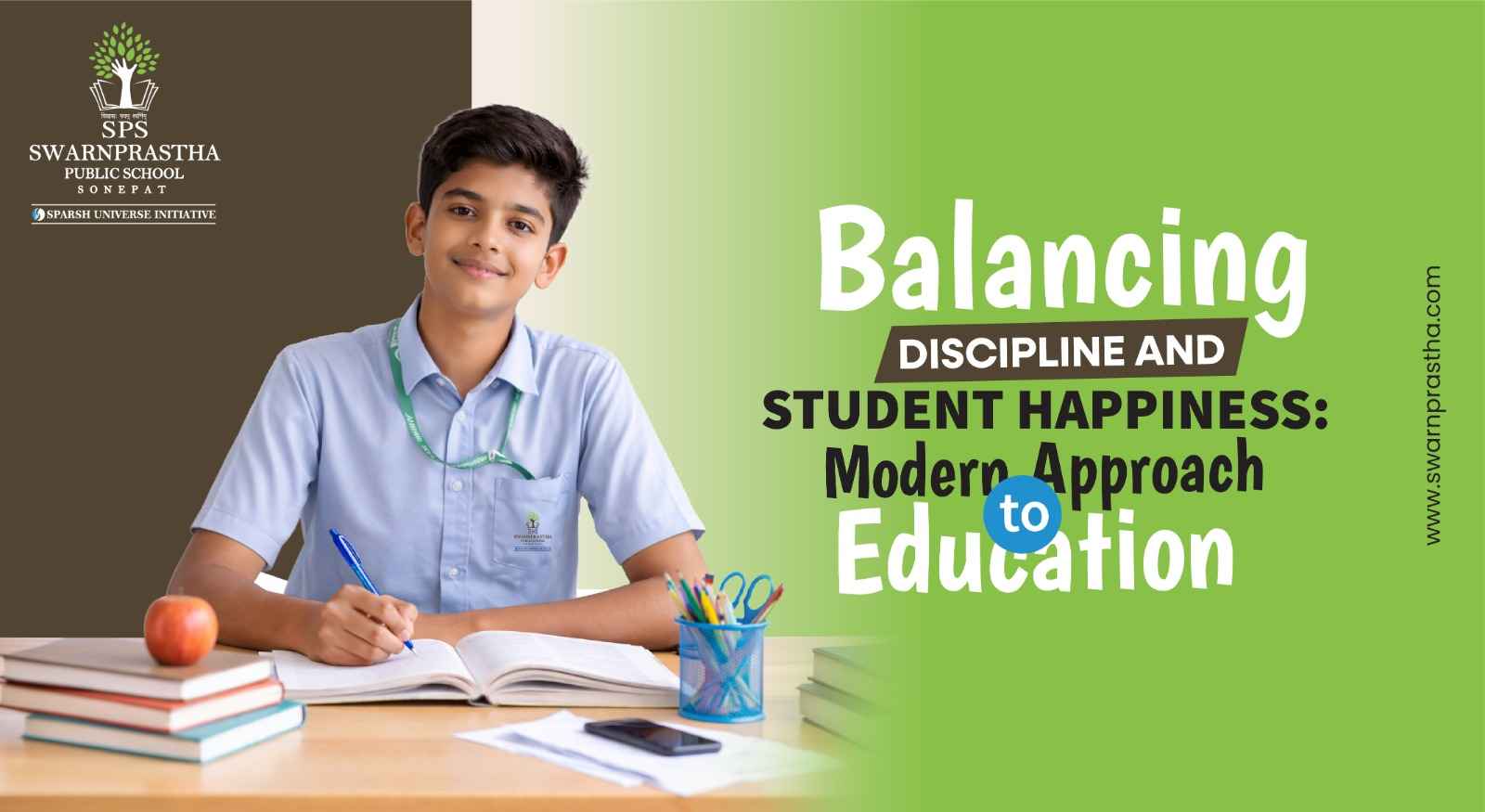
The most effective schools have worked out that discipline and happiness are not competing priorities. They are, in fact, necessary conditions for each other. A child who feels safe, understood and purposefully challenged in a top school in sonipat is far more likely to behave well, apply themselves and genuinely enjoy school. A child who is merely controlled tends to be either quietly resentful or openly disruptive.
At SPS, this understanding sits at the centre of how we approach school life. Here is what that looks like in practice — and why it matters for your child.
What Discipline Actually Means
The word 'discipline' carries a lot of baggage. For many parents, it conjures images of strict rules, punishments and a culture of fear. That model of discipline — where behaviour is controlled through consequence alone — is not what modern schools should be doing. It never produced genuinely good citizens. It produced children who behaved well when watched and badly when they were not.
At Swarnprastha Public School, discipline is rooted in respect, fairness and responsibility. The goal is not compliance. It is a character. When a student understands why certain standards exist — what they protect, what they make possible — they are far more likely to internalise them. Rules that are explained are rules that are kept. Rules that are simply imposed tend to be tested.
Positive Reinforcement Over Punishment
SPS operates on the principle that encouraging and recognising students is more effective than punishing them. This does not mean that consequences do not exist — they do, and they are applied consistently and fairly when needed. But the first instinct here is to catch students doing the right thing rather than waiting for them to do the wrong thing.
Students are more likely to learn from their mistakes when they feel comfortable talking about them. That requires an environment where communication between students, teachers and families is genuinely open. At SPS, multiple channels exist for these conversations — quarterly Parent Teacher Meetings, the MCB mobile app for day-to-day updates and the presence of House Parents for boarding students who are accessible and know their students by name.
When a more serious disciplinary issue does arise, a structured process is followed — warnings, consequences, and behaviour reviews — carried out in a way that is equitable and transparent. Parents are involved. The process has a purpose: not to punish, but to correct.
Happiness Is Not the Absence of Challenge
There is a version of student happiness that schools sometimes chase which is really just the absence of discomfort. Avoid anything difficult, remove any source of frustration, keep everyone comfortable. That approach does not produce happy students. It produces students who are unprepared for anything that requires effort.
Real happiness in school comes from mastery — from attempting something hard and getting through it. From finding out what you are good at. From belonging to something larger than yourself. SPS has always maintained that for most children, schooling becomes 'about scoring marks, not deep understanding, about mundane routine, not enthusiasm, being constrained, not comfortable and fear of failure not chasing happiness.' That is precisely what our school sets out to change.
The school’s child-centric approach places the individual learner at the centre of the educational experience. Each child is different. What challenges one student energises another. SPS works with that reality rather than against it.
Counselling and Emotional Support Built In
One of the things that distinguishes a modern school from an old-fashioned one is how it handles the emotional life of its students. An older model of schooling simply ignored it. If a student was struggling emotionally, the expectation was that they would manage it privately and get on with their work.
SPS takes a different view. Counselling sessions are part of the school’s academic support structure — not something reserved for crisis situations, but a regular resource available to students across year groups. When a child is struggling, whether academically or personally, there is a trained adult whose job it is to help them work through it.
The school also has a Mindfulness Curriculum, which is embedded in daily school life. Yoga, Pranayama and Meditation are practised regularly — not as optional extras but as recognised tools for building the kind of inner steadiness that makes a student more resilient, more focused and better company for the people around them.
A School Life That Has Room for Everything
A school that cares only about academic results tends to squeeze out everything else. Sport becomes optional. Arts become peripheral. The time between lessons — where friendships form and personalities develop — gets trimmed to fit in more revision.
SPS does not use the word 'extra-curricular' because the school does not regard non-academic involvement as extra. Music, Dance, Art, Sport and club activities are considered essential to the development of life skills. The range on offer is substantial:
• Sports: Football, Tennis, Basketball, Cricket, Badminton, Swimming, Squash, Shooting and Taekwondo
• Arts: Music, Dance, Drama and Visual Arts
• Innovation: Atal Tinkering Lab and the D.I.C.E. (Design, Innovation, Creativity and Entrepreneurship) initiative
• Leadership and service: The Duke of Edinburgh’s International Award and community service programmes
A student who has an outlet — a sport they love, a creative practice, a cause they care about — is a student who has reason to show up. That, in turn, makes discipline far easier to maintain.
The Role of Values in All of This
Discipline that is not grounded in values eventually runs out of road. You can control behaviour through rules up to a point — but the moment the rules are removed, or the teacher is not in the room, you discover what the child actually believes.
At SPS, moral and spiritual values are woven into the fabric of daily school life. Integrity, empathy, honesty and respect for others are not taught as separate subjects. They are part of how the school operates. Through value-based education, mindfulness and community service, students develop a moral compass that they carry with them beyond school. A child who genuinely understands why certain behaviours matter does not need to be watched constantly. That is the whole point.
Conclusion
Discipline and happiness are not at war — not when both are understood properly. A child who is known, challenged, supported and given room to flourish does not need to be managed. They manage themselves. That is what Swarnprastha Public School, Sonepat, works towards every day: not students who behave because they must, but students who thrive because they genuinely want to.
If you would like to understand more about how SPS approaches student wellbeing and school discipline, we welcome you to visit the campus and see it first hand.
Frequently Asked Questions
Que.1) How does SPS handle discipline without making students fearful or anxious?
Ans) SPS approaches discipline through positive reinforcement, clear expectations and open communication rather than through fear of punishment. At the start of each academic year, students and parents receive a clear set of rules covering academics, behaviour and conduct. When issues arise, the school follows a structured process — involving warnings, consequences and behaviour reviews — that is applied consistently and fairly. Encouraging students is considered more effective than punishing them and the school invests significantly in counselling sessions and mentor support to help students navigate challenges before they escalate.
Que.2) My child tends to be unhappy in overly rigid environments. Will SPS suit him?
Ans) SPS has a child-centric approach, which means the school pays attention to individual temperament rather than expecting every student to fit the same mould. The school’s philosophy explicitly rejects the idea that schooling should be about 'mundane routine, not enthusiasm.' Co-curricular activities — spanning sport, arts, innovation and leadership — give students a range of ways to engage and find their footing. The Mindfulness Curriculum, counselling support and the emphasis on values-based learning all contribute to an environment where structure and personal happiness are treated as compatible — because at SPS, we believe they genuinely are.
Que.3) How does the Mindfulness Curriculum help students at SPS?
Ans)The Mindfulness Curriculum at SPS includes Yoga, Pranayama, and Meditation. These practices help students improve focus, emotional balance, resilience, stress management, and overall wellbeing, enabling them to handle academic and personal challenges more effectively.
Que.4) How do school activities help students?
Ans) School activities like sports, music, art, and clubs help students become more confident and responsible. They also teach teamwork, discipline, time management, and leadership skills. These activities help students grow both inside and outside the classroom.
